
Viktor Eliasson
New white paper: Software defines premium — the 7 Pillars
Diadrom started out in 1999 and has done one thing ever since: made complex, software-defined machines tell you what's wrong with them. First boats, then trucks and cars, now defence platforms.
History
Founded in Gothenburg as Newmad Technologies — research and consulting on next-generation mobile IT terminals, building telematics and connected products around Volvo Penta's marine engines.
Rebranded to Diadrom and made diagnostics — begun on Volvo Penta's engines in 1999 — the company's single discipline.
Listed under the ticker DIAH. Today traded on Nordic Growth Market, NGM Nordic SME.
First defence programme enters service. Diagnostics discipline meets platforms with decades-long service lives.
Diadrom diagnostics running in serial-production vehicles — today more than 250,000 of them.
Viktor Eliasson becomes CEO, intensifying the focus on the product business.
Diagnostics software and expert services for automotive programmes and defence platforms — and the electronics suppliers that feed them.

Gothenburg, Sweden
Första Långgatan 17, a short walk from the harbour. An independent Swedish company, listed on NGM Nordic SME, with customers worldwide.
Core values
Direct rather than diplomatic. Specific rather than smooth. We would rather tell you a thing will not work than be easy to deal with. The values below aren't wall decoration — they're how engagements run.
The engineer who builds it is the one you talk to. No account layer in between.
The 'getting things done' attitude our customers keep mentioning. We care about the outcome, not the hours.
One specialist, a complete team, or a bounded delivery — the engagement adapts to your programme, not the other way around.
Earned over 27 years in programmes where failure is not an option — and kept by saying no when something won't work.
Our people
Diagnostics is a people business — the software is only as good as the engineers behind it. In their own words, translated from Swedish and shortened:
“I feel appreciated as an employee, and trusted by Diadrom when I'm out on assignment.”
“If you find something interesting, or good colleagues, on an assignment you can get stuck for a while. Which is what happened on my latest one.”
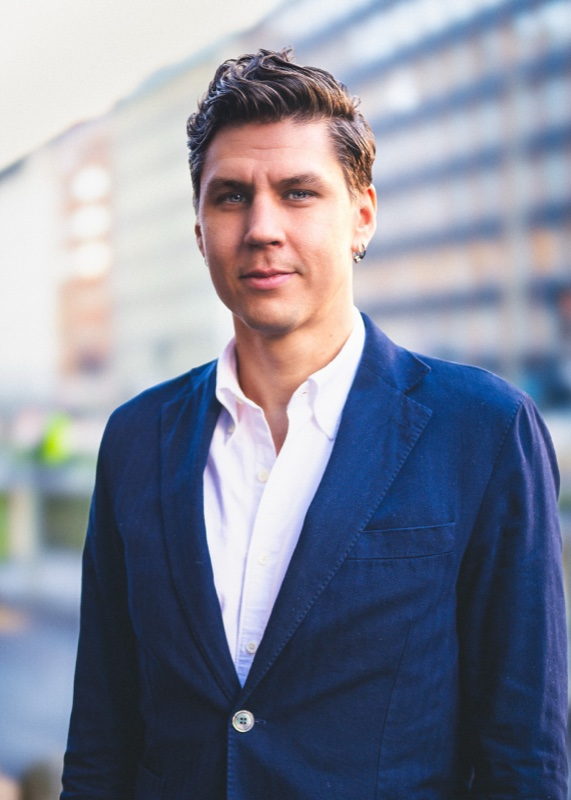
“I really think Diadrom is open to letting people grow in the direction they want. I'm proof of that: I showed an early interest in project management, and the company gave me the opportunity to do exactly that. Diadrom has genuinely furthered my career, and I keep growing in my work.”
“The thing I admire the most about Diadrom is their work culture, which is not only diverse but super inclusive. One never feels stuck and will always have the sense of freedom to grow professionally at their own pace. … And it goes without saying, how much I appreciate being welcomed here, rejoining after several years.”
Daily operations
Viktor Eliasson

Mathias Bohlins

Jennifer Jungle Götestam

Clara Sahlsten
Certified & connected
ISO certifications held by Diadrom Holding AB, covering the subsidiaries Diadrom Systems AB and Diadrom Software AB. Memberships held by Diadrom Systems AB.
Next step